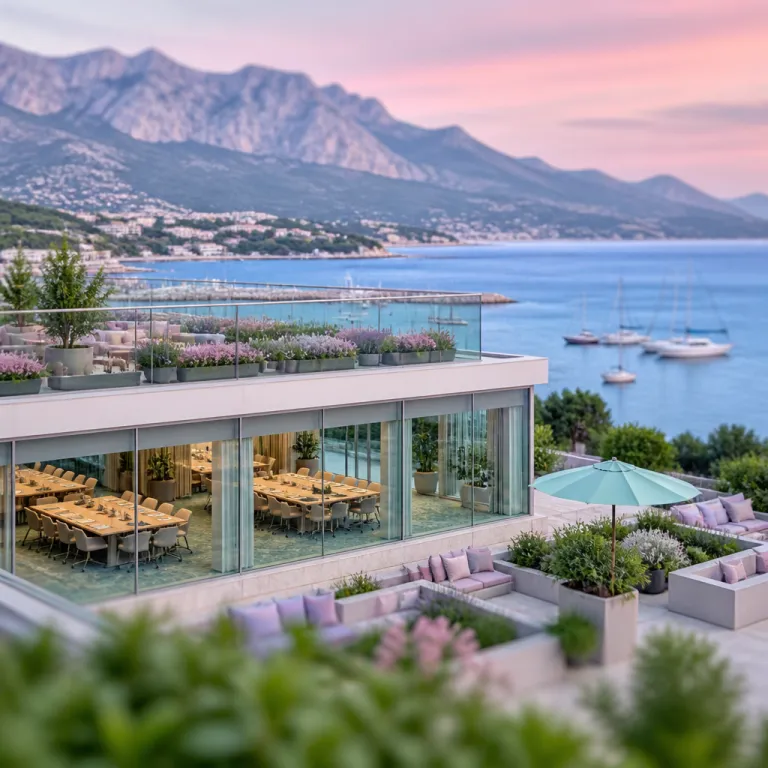
From beach playground to congress powerhouse on the Turkish Riviera
Antalya has long been shorthand for resort tourism on Turkey’s southern coast. Today the same shoreline is being reimagined as a serious conference and congress hub on the Turkish Riviera, where international planners, hospitality brands, and policy makers quietly redraw the map of meetings in Turkiye. For business leisure travelers, that shift means you can attend a high level congress in the morning and swim under pine framed cliffs before dinner.
The catalyst is clear: COP31 is expected to bring more than 80,000 participants to the Antalya EXPO Center and surrounding districts, a scale that local leaders say will eclipse the G20 summit once held in Turkey. Preliminary attendance estimates have been cited in national planning notes and early UNFCCC style briefings, which treat the event as a turning point for the city’s meetings industry. When such an international congress is held in a destination already welcoming over 17 million visitors a year, as reported in recent Antalya regional tourism statistics and GoTurkiye summaries, the result is a new gravitational pull for the global tourism sector and for congress tourism in particular. Antalya is positioning itself not as a seasonal resort, but as the attraction center where continents meet for climate negotiations, industry events, and media forum gatherings that shape international tourism policy.
Local hoteliers understand that this is not just another exhibition or short term spike in international visitors. Infrastructure built for COP31 will outlast the summit and will support a new generation of star hotels, upgraded transport links between Istanbul and Antalya, and a more diversified mix of tourism Antalya segments from health tourism to culture tourism and academic social sciences meetings. As one general manager of a five star resort put it in a recent Antalya tourism board briefing, “We are planning for the decade after COP31, not just for two busy weeks.” For decision makers choosing between northern capitals and the Turkish Riviera, the equation is shifting decisively toward the Mediterranean.
COP31 and the Antalya EXPO Center: legacy infrastructure for global events
The Antalya EXPO Center sits a short drive from the coast, and COP31 will turn this already capable venue into a flagship for large scale meetings and incentive travel on the Turkish Riviera. During the summit, its halls will host plenary sessions, congress exhibition spaces, and side events where international tourism, climate policy, and the wider hospitality industry intersect. Those same halls will later welcome corporate events, international congress series, and specialist conferences that previously defaulted to Istanbul or European capitals.
For organizers, the numbers matter because they translate directly into flexibility and risk management. The EXPO complex and surrounding hotels will be able to handle tens of thousands of visitors from dozens of countries, supported by Antalya’s 300 plus five star hotels and roughly 600,000 beds across the wider region, a scale highlighted in GoTurkiye accommodation overviews and Antalya provincial tourism statistics. This concentration of upscale inventory is unmatched by many traditional congress tourism destinations. When an international congress is held year after year in the same northern city, delegates often tire of the routine; Antalya offers a fresh alternative with reliable capacity and a climate that flatters November dates.
Transport upgrades tied to COP31 will also reshape how delegates move between Istanbul–Antalya routes, the airport, and the coastal hotel zones. Direct flights already connect the city to more than 200 destinations, according to Antalya Airport and GoTurkiye route maps, and improved ground links will shorten transfer times between the EXPO Center and key conference hotels such as Rixos Downtown Antalya or Akra Hotel Antalya, both of which combine serious meeting rooms with Mediterranean views. If your board prefers to mix plenary sessions with incentive golf, the Belek coast just east of the city offers championship courses; our detailed guide to summer golf on the Turkish Riviera shows how easily a congress schedule can dovetail with tee times.
Where to stay: conference ready hotels with real beach access
What sets Antalya’s conference hotels apart from many European rivals is the way serious meeting infrastructure sits inside full scale beach resorts. Properties like Akra Hotel Antalya, Crowne Plaza Antalya, Lara Barut Collection, Rixos Downtown Antalya, and Sunmelia Beach Resort Hotel & Spa offer modern conference centers, yet your coffee break still comes with sea air and mountain silhouettes. For business leisure travelers, that means you can close a deal in a glass walled boardroom and be in the water ten minutes later.
These hotels are not just about size; they are about how hospitality teams understand the rhythm of international congress life. At Lara Barut Collection, for example, large meeting halls can host a regional congress exhibition while satellite rooms handle workshops on health tourism, culture tourism, or social sciences, all supported by a Turkish culinary program that quietly outperforms many city center venues. Rixos Downtown Antalya and Akra Hotel Antalya both function as an attraction center for decision makers who want five star hotels with credible wellness offerings, strong Wi‑Fi, and terraces that make even a late media forum feel less like work.
Families extending a stay after an international tourism event will find that many Antalya beach resorts are designed to keep children genuinely occupied while adults attend final sessions. Resorts along the Lara and Belek coasts combine kids clubs, shallow beaches, and water parks with conference wings that feel discreet rather than intrusive; our guide to Antalya with kids and family friendly hotels is a useful companion when you are turning a congress into a family holiday. In practice, this blend of serious facilities and resort level leisure is what convinces many international visitors that Antalya is a better base than a purely urban convention center.
Seasonality, climate, and why November works for serious meetings
Conference planners used to think of Antalya mainly in terms of the summer season, when charter flights and all inclusive bracelets dominate the shoreline. That image is now outdated because Antalya’s conference and congress sector increasingly targets the shoulder months, when temperatures are mild, the sea is still swimmable, and hotel inventory is more flexible. For international congress organizers, November dates suddenly look less risky when you compare them with grey northern skies and early snow.
Local tourism Antalya data shows that while peak leisure demand still clusters in July and August, the period from September to May offers a sweet spot for events. Venues report that “September to May for favorable weather and availability” is now the preferred window for conferences and corporate events, a pattern that aligns perfectly with COP31’s planned timing and with the wider strategy of the Ministry of Culture and Tourism in Turkiye. When a major congress is held year after year in this shoulder season, hotels can maintain higher staffing levels, the tourism sector becomes less dependent on the summer season, and international tourism flows become more evenly spread.
For delegates, the lived experience is what counts. You step out of a plenary on social sciences or climate policy and the air is still warm enough for an outdoor coffee, yet the beaches are quiet and the service in star hotels feels unhurried. As one repeat delegate from a European energy company noted after a recent industry congress, “In November we can actually talk on the terrace without coats, and the hotel team has time to remember our names.” This is where Antalya outperforms many established congress tourism destinations, because the same infrastructure that handles mass leisure tourism in high summer can be redeployed for high value events when the crowds thin and the hospitality teams have time to focus on detail.
Connectivity, Istanbul links, and the rise of Antalya as a decision makers’ hub
Accessibility is the other pillar of Antalya’s conference appeal, and here Antalya Airport punches far above its weight. Direct flights from more than 200 cities across Europe, the Middle East, and Central Asia mean that visitors from multiple countries can reach the city without changing planes in Istanbul. For global companies planning an international congress, that network reduces travel friction and makes it easier to justify Antalya as a neutral meeting point where continents meet.
The relationship between Istanbul and Antalya is evolving from simple feeder traffic into a dual city ecosystem for the tourism sector and wider industry. Istanbul remains the financial and media forum capital, but Antalya is emerging as the Mediterranean conference center where hospitality brands, health tourism operators, and culture tourism institutions host their annual events. When a congress exhibition is held year after year in the same coastal city, decision makers begin to see it not just as a resort, but as a strategic hub for international tourism and for the broader Turkish economy.
Within the city, upgraded roads and public transport will tighten the link between the EXPO Center, downtown business districts, and the main hotel zones. That means a delegate can attend a morning session at the congress center, hold side meetings in a city hotel, and then retreat to a quieter coastal property for the night. For travelers who prefer a more historic base, Kaleiçi’s restored mansions offer characterful stays within easy reach of modern venues; our review of an elegant special class stay in Kaleiçi shows how old town charm can complement a week of high level events.
Looking ahead: Hilton Antalya City Centre and the future of congress hospitality
The planned Hilton Antalya City Centre is perhaps the clearest signal of where Antalya’s conference and congress hospitality is heading. With 254 rooms, a major ballroom, and a full suite of conference rooms designed for MICE, this property will anchor a new generation of urban hotels that treat meetings as a core identity rather than an add on. Its location in central Antalya will allow delegates to move easily between the EXPO Center, municipal offices, and the waterfront.
For the hospitality industry, such investments show confidence that international congress demand will continue to grow well beyond COP31. Turkey’s national tourism strategy aims to reach tens of billions of dollars in revenue by diversifying beyond beach tourism, and Antalya’s mix of star hotels, resort infrastructure, and city center projects like the Hilton align perfectly with that goal. When these properties host events on health tourism, culture tourism, or social sciences, they reinforce the city’s role as an attraction center for knowledge based tourism Antalya, not just for sun seekers.
Planners weighing venues for future congress exhibition cycles should think in terms of legacy rather than one off events. Antalya offers a rare combination of scale, climate, and hospitality expertise, underpinned by a tourism sector that already knows how to handle millions of visitors a year without losing its sense of place. As one local briefing from the regional tourism board neatly summarizes, “Why choose Antalya for conferences? Scenic views, modern facilities, and rich culture.”
Key figures shaping Antalya’s rise as a conference capital
- Antalya welcomes more than 17 million visitors a year, a volume that gives the local tourism sector the experience and staffing depth needed to support large scale international congress events alongside leisure travel. These headline figures are regularly highlighted in GoTurkiye destination profiles and Antalya regional tourism statistics.
- The region offers around 300 five star hotels and roughly 600,000 beds, creating one of the highest concentrations of upscale accommodation in Turkey and making Antalya uniquely suited to host congress tourism where delegates expect resort level comfort, according to Antalya provincial tourism directorate data and national accommodation inventories.
- COP31 at the Antalya EXPO Center is expected to attract over 80,000 participants, a scale that local leaders say will surpass the earlier G20 summit and firmly position the city as a global attraction center for climate related events, based on preliminary figures shared in national planning documents and UNFCCC style host country submissions.
- Direct flights from more than 200 cities connect Antalya to key markets across Europe, the Middle East, and Central Asia, which allows visitors from many countries to reach the city without transiting through Istanbul and strengthens its role as a place where continents meet; this connectivity is emphasized in Antalya Airport schedules and GoTurkiye route overviews.
- Events in Antalya can already accommodate up to around 1,200 attendees in single venues, and the combination of EXPO halls with hotel ballrooms means that congress exhibition organizers can scale programs from specialist workshops to major international tourism gatherings, as reflected in ICCA style meetings industry reports and regional MICE catalogues.
FAQ about conferences and congress tourism in Antalya
Why are more conferences choosing Antalya over other Turkish cities ?
Organizers are drawn to Antalya because it combines serious conference infrastructure with resort level hospitality, something that Istanbul and other cities in Turkiye cannot always match at the same scale. The Antalya EXPO Center, extensive five star hotels, and strong international flight network make the destination particularly attractive for international congress planners. For delegates, the ability to mix meetings with Mediterranean downtime is a decisive advantage.
What is the best time of year to host events in Antalya ?
Most conference planners now target the period from September to May, when temperatures are mild and hotel availability is higher than in the peak summer season. Local venues consistently report that “September to May for favorable weather and availability” is the optimal window for conferences and corporate events. This timing aligns well with the broader strategy of the Ministry of Culture and Tourism to spread tourism Antalya demand more evenly across the year.
Are there enough large venues and hotels for major international congress events ?
Yes, Antalya already offers a combination of the EXPO Center, city hotels, and coastal resorts that can host large congress exhibition programs. Individual venues can handle up to around 1,200 attendees in a single hall, while the wider destination can support events with tens of thousands of visitors when multiple hotels and centers are used. This capacity is one reason why COP31 and other international tourism gatherings are being held in the city.
How easy is it for international visitors to reach Antalya for conferences ?
Antalya Airport is one of the busiest in Turkey, with direct flights from more than 200 cities across Europe, the Middle East, and Central Asia. Many delegates can fly directly without changing planes in Istanbul, which simplifies logistics for international congress organizers. Once on the ground, upgraded roads and transfers link the airport efficiently with the EXPO Center and major hotel zones.
Can delegates combine a conference with leisure time on the coast ?
Combining a three day conference with a two day coastal extension is one of Antalya’s key strengths. Delegates can stay in conference focused city hotels during the main program, then move to beach resorts in Lara, Belek, or the old town area for post event relaxation. This blend of work and leisure is central to the appeal of the region’s conference and congress tourism for both companies and individual travelers.
References
- GoTurkiye official meetings and incentives information for Antalya and national tourism strategy documents from the Ministry of Culture and Tourism, including visitor numbers and accommodation capacity.
- Antalya tourism statistics and visitor numbers published by regional tourism authorities and Antalya tourism boards, covering annual arrivals, hotel inventory, and seasonality trends.
- International meetings industry reports from organizations such as ICCA and UN Tourism covering congress tourism trends in Turkey and the wider Mediterranean, alongside UNFCCC style documentation for COP host cities.