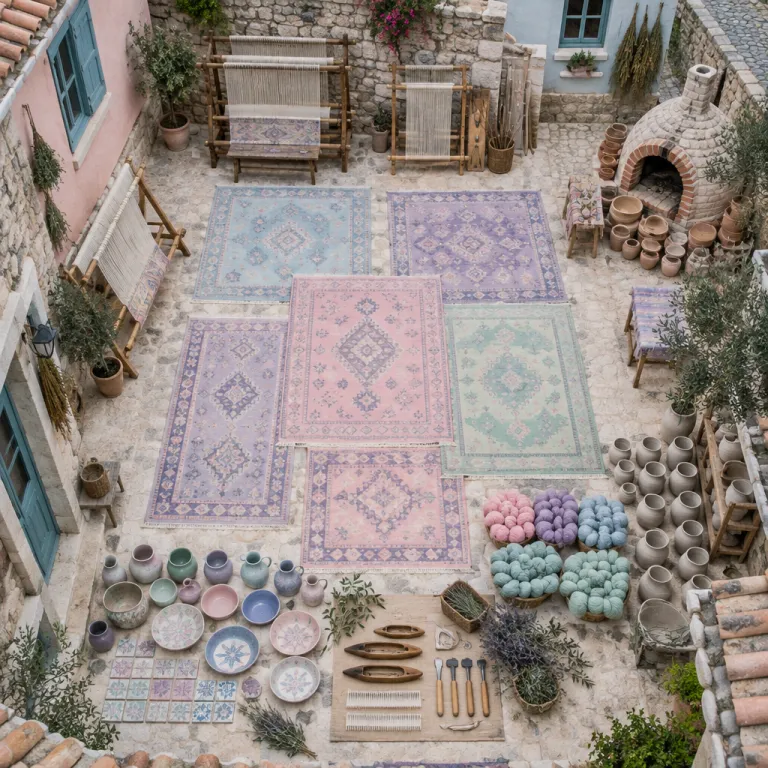
From luxury lobbies to the antalya carpet weaving ceramics village artisan trail
Antalya’s most interesting luxury stays now curate time with makers. A growing number of premium hotels quietly steer guests from marble lobbies toward an antalya carpet weaving ceramics village artisan excursion in the nearby hills, where carpets and rugs are still tied knot by knot. For couples used to polished resort service, this shift from infinity pool to loom room feels both intimate and deeply Turkish.
In the old town of Kaleiçi, concierges at high end properties talk as fluently about wool and natural dyes as they do about spa menus and yacht charters. They know which village workshop near Döşemealtı is working on red and dark blue prayer rugs that week, which family cooperative in Çandır still uses warps and wefts of hand spun wool, and which ceramicist in Avanos is firing a new series of white ground plates. This is where the phrase antalya carpet weaving ceramics village artisan trail stops being a search query and becomes a real itinerary shaped around art, production, and people.
For travelers browsing a luxury and premium hotel booking website in Antalya, this matters. You are not just choosing a room category or a sea view; you are choosing how close you want to stand to the living crafts of Anatolia, from rugs woven in central Anatolia designs to ceramics inspired by western Anatolia motifs. The best properties now present carpets, rugs, and silk carpets not as décor, but as invitations to meet the artisans whose early century techniques still define the region’s visual language.
Meeting weavers at the loom: how to read carpets and rugs
Leave the resort mid morning and within forty minutes you can be in a town where the soundtrack is shuttles clacking and wool being beaten clean. In these villages the antalya carpet weaving ceramics village artisan route runs through simple rooms where women sit at upright looms, their fingers moving so fast the growing pile seems to appear by itself. Here, carpets and rugs are not anonymous exports; they are biographies in wool, silk, and colour.
When you stand beside a loom, you finally see how design decisions happen knot by knot. A weaver might explain why this prayer rug uses a dark blue mihrab shape against a white ground, while another prefers red blue borders that echo central Anatolia patterns from the early century of organised carpet production. Ask to touch the back of the carpet or rug; in hand knotted rugs the warps and wefts feel slightly irregular, and the pile bends softly rather than springing back like synthetic fibre.
Travelers often ask how to tell hand knotted wool carpets or silk rugs from machine made rugs produced for mass markets. Look for tiny variations in traditional motifs, slight asymmetries in the designs, and subtle shifts in colours where natural dyes have taken differently to the wool. A good weaver in this antalya carpet weaving ceramics village artisan context will happily flip the carpet, show you the knots, and explain how long this particular piece of rug weaving has taken, from shearing to final trimming of the pile. For a deeper primer before you go, read our guide to Antalya’s craft workshops as a way into the culture and arrive with the right questions ready.
Village ceramicists and the art of turkish colour
The same hills that shelter looms also hide kilns, and the antalya carpet weaving ceramics village artisan trail often pairs both in a single afternoon. In one town you might watch rugs woven in a courtyard, then step next door to see a potter centering clay on a wheel, his hands stained with slips the colour of the Mediterranean. For travelers used to hotel gift shops, the difference between this and a bazaar transaction is immediate and almost physical.
In these workshops, ceramic art is not a side hustle; it is the main production, with glazes mixed in buckets and designs sketched freehand on unfired plates. You will see motifs that echo carpets Hereke from western Anatolia, tulips and arabesques that once decorated tiles in the Ottoman Empire, now reimagined in contemporary designs for couples furnishing city apartments. Many ceramicists talk about how they borrow the geometry of prayer rugs, the rhythm of rug weaving borders, and the red blue contrasts of central Anatolia carpets to create a coherent visual language across both clay and wool.
Some of Antalya’s more thoughtful resorts now build relationships with specific village ceramicists, commissioning custom pieces for suites and spa areas. When you book a stay at a property like the Crystal Tat Resort & Spa in Belek, where refined Antalya stays meet artisan stories, you may find that the vase in your room or the tiles around the pool were shaped by a named maker you can actually visit. This is the antalya carpet weaving ceramics village artisan promise at its best; rugs produced in one valley, silk carpets from another, and ceramics from a nearby town, all threaded back into the hotel’s design narrative so that every object has a traceable origin.
Choosing the right luxury base for an artisan focused stay
Not every five star property in Antalya is equally connected to the antalya carpet weaving ceramics village artisan network. Some focus on all inclusive entertainment, while others quietly cultivate relationships with weavers in central Anatolia and ceramicists in western Anatolia, curating private visits that feel more like being welcomed into a home than joining a tour. When you scroll through a luxury and premium hotel booking website in Antalya, look beyond pool counts and spa menus to see how deeply each hotel engages with local art and production.
Ask whether the carpets and rugs underfoot are hand knotted wool carpets or machine made imitations, and whether any silk carpets or silk rugs in the lobby can be traced back to a specific village. Properties that take provenance seriously will know which town produced each carpet, which family handled the carpet weaving, and whether natural dyes were used to achieve those deep reds and dark blues. Some hotels even rotate prayer rugs and prayer rug inspired wall hangings from different villages, turning corridors into quiet galleries of rugs woven across Anatolia.
For travelers planning a romantic stay, the most rewarding choice is often a coastal property with easy road access inland. That way you can spend mornings on the shoreline featured in our guide to Antalya beach escapes for luxury travelers on the Mediterranean coast, then drive into the hills for an antalya carpet weaving ceramics village artisan visit after lunch. Look for concierges who can arrange small scale trips, ideally with a driver who knows which early century style carpets Hereke reproductions are worth seeing, and which workshops are currently focused on new designs or experimental warps and wefts techniques.
How to buy well: questions, ethics, and fair value
Standing in a village loom room or ceramic studio, many travelers feel both tempted and unsure. The antalya carpet weaving ceramics village artisan trail is full of beautiful carpets, rugs, and ceramics, but the etiquette of buying directly from artisans can feel opaque if you are used to fixed price hotel boutiques. A few clear questions and principles help you navigate with confidence and respect.
Start by asking about materials and dyes, and listen for mentions of wool from specific flocks, silk sourced from known suppliers, and natural dyes made from plants or minerals. A weaver proud of their work will happily explain how the pile was built, how long this particular carpet weaving project took, and why they chose a white ground field with red blue borders instead of the more common dark blue background. In ceramic studios, makers often talk about how their designs echo traditional Turkish motifs from the Ottoman Empire, or how they adapt the geometry of prayer rugs into plate rims and tile panels.
Price is always a delicate subject, but buying at the source usually means a fairer share of the final amount reaches the artisan. When you purchase wool carpets or silk rugs directly in a town workshop, you are paying for months of labour, not just a label. Travelers who follow the antalya carpet weaving ceramics village artisan route often end up with one significant piece rather than several small souvenirs; a single rug woven in central Anatolia colours, or a set of plates whose designs will always recall the day you watched their production, can hold more meaning than a suitcase of anonymous objects.
Designing an artisan day trip from the coast
From most luxury hotels along Antalya’s coast, an antalya carpet weaving ceramics village artisan excursion fits easily into a relaxed day. Plan to leave after breakfast, when the light is soft and the mountain roads are quiet, and aim for a loop that takes in at least one weaving village and one ceramics town. This balance keeps both partners engaged, especially if one of you is more drawn to textiles and the other to clay and colour.
A typical route might climb into the foothills where central Anatolia influences meet the Mediterranean, passing roadside stalls hung with rugs produced in family workshops. Here you can stop briefly to see how designs differ from valley to valley, with some carpets and rugs favouring bold red blue contrasts and others leaning into softer natural dyes that echo the surrounding landscape. Continue to a village known for rug weaving, where you can sit with women tying knots into a growing pile while they explain how their mothers taught them to read warps and wefts like a musical score.
After a simple lunch in the town square, head to a nearby ceramics hub where kilns have been firing since the early century of regional craft trade. Many studios here consciously reference carpets Hereke and other western Anatolia patterns in their art, translating the borders of prayer rugs into plate rims and the geometry of central Anatolia medallions into tile designs. You will return to your hotel by late afternoon, in time for a swim and sunset drink, carrying not just purchases but a clearer sense of how the antalya carpet weaving ceramics village artisan world underpins the aesthetics of the luxury spaces you are staying in.
Key figures on Antalya’s artisan and hospitality landscape
- Turkey has a long tradition of organised carpet weaving cooperatives across Anatolia, and many luxury hotels in and around Antalya source carpets and rugs from nearby village workshops rather than distant factories, strengthening local economies and keeping skills in use.
- Master weavers in Anatolia often talk about building up to several thousand individual knots per square metre on fine hand knotted carpets, which means a medium sized wool carpet can require many weeks or even months of steady work by a single artisan.
- International studies on cultural tourism, such as reports by the UNWTO and OECD, consistently show that travelers who engage in artisan experiences, such as visiting a carpet weaving or ceramics workshop near Antalya, tend to spend more in destination than those who focus only on standard sightseeing.
- Research on natural dyes and sustainable textiles from organisations like UNESCO and the International Trade Centre highlights that naturally dyed wool carpets and rugs can reduce reliance on petrochemical based colourants, a factor increasingly valued by eco conscious luxury travelers choosing where to stay and what to buy.
FAQ about Antalya’s artisan trail and luxury stays
How far are the weaving and ceramics villages from Antalya’s main resorts ?
Most villages on the antalya carpet weaving ceramics village artisan trail sit between 30 and 90 minutes by car from the main coastal resorts, making them easy half day trips from luxury hotels in Lara, Belek, or Kemer. Road conditions are generally good, and many properties can arrange private drivers who know the specific towns where carpets, rugs, and ceramics are actively produced.
Can I visit workshops without joining a large group tour ?
Yes, many weavers and ceramicists prefer small scale visits arranged through hotel concierges or local guides. Couples staying at premium properties can usually request private appointments in village workshops, which allows more time to talk about designs, materials, and the story behind each carpet, rug, or ceramic piece.
How can I be sure a carpet is genuinely hand knotted ?
Check the back of the carpet or rug for slight irregularities in the knots and pattern, feel the flexibility of the pile, and ask the weaver to explain the warps and wefts structure. Genuine hand knotted wool carpets or silk rugs from Anatolia will usually show small variations in colours and motifs, reflecting the human hand rather than machine precision.
Is it possible to ship carpets and ceramics home safely ?
Most established workshops on the antalya carpet weaving ceramics village artisan route work with international shippers and can arrange insured delivery to the United States and other countries. Carpets and rugs are typically rolled and wrapped securely, while ceramics are packed in reinforced crates; always keep documentation for customs and insurance purposes.
Which type of traveler gets the most from these artisan experiences ?
Culturally engaged couples and slow travel oriented solo visitors tend to gain the most, especially those interested in design, art, and the stories behind objects. If you enjoy understanding how carpets, rugs, and ceramics move from raw wool or clay to finished pieces, and you value meeting the people behind your purchases, the antalya carpet weaving ceramics village artisan trail will feel like a natural extension of a luxury stay.