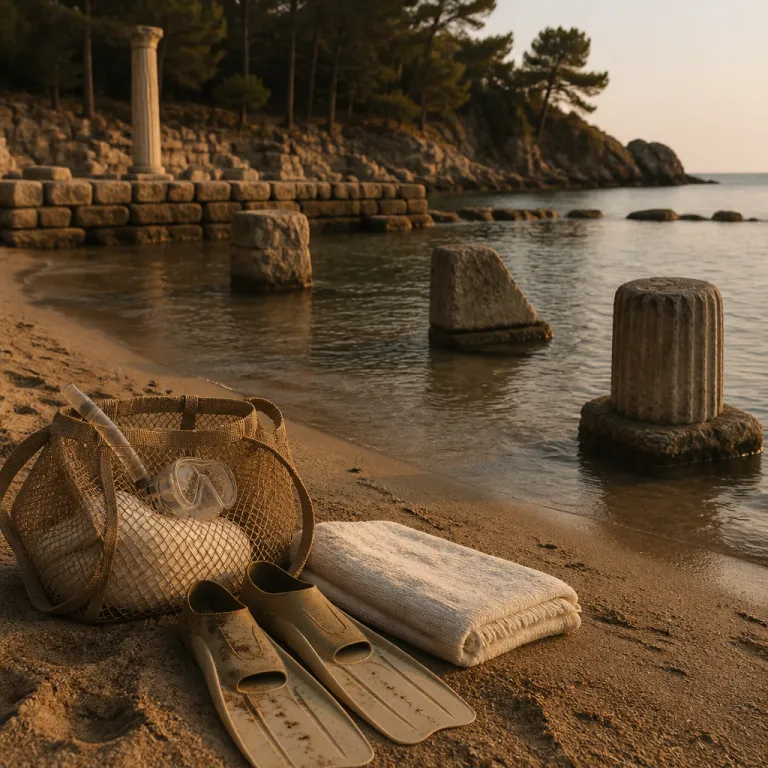
Phaselis ruins Antalya beach: marble ruins, pine forest and turquoise bays
Phaselis ruins antalya beach: a coastal day between marble and turquoise water
Phaselis sits on a quiet curve of the Antalya coast, where the forest reaches straight down to the sea. This former ancient city once linked Greece, Asia, Egypt and Phoenicia, and today the same natural harbours shelter visitors who slip into the water between stone piers and pine roots. If you are choosing between Antalya beaches for a romantic or relaxed day, the main reason Phaselis stands apart is that you can swim at a protected archaeological site while the ruins of an ancient port frame every view.
The city of Phaselis was founded by Rhodian colonists in the 7th century BCE and later taken by Alexander the Great in 333 BCE, and the sense of layered history is immediate as you walk from the entrance through the pines toward the sea. You step onto a main avenue almost 24 metres wide, paved in worn stone, and this main street runs between the theatre, the agora and the line of the aqueduct that once carried fresh water to the ancient city. Travellers who care about culture as much as coastal relaxation will find that this blend of ruins, nature and sea life feels more intimate than the larger archaeological sites closer to central Antalya.
From the first glimpse of the bays, you understand why this site in Turkey became a maritime hub and why its natural beauty still draws visitors who prefer quiet beaches to crowded resort strips. Three natural harbours curve around the peninsula, each with its own character, and the Phaselis beach experience changes subtly as you move from one bay to the next. When you plan a day to explore Phaselis ruins Antalya beach, think of it less as a checklist of monuments and more as a coastal walk where history, nature and the Mediterranean Sea keep trading places in the frame.
Image tip: A wide shot of the main avenue leading to the sea, with pine trees on both sides and swimmers in the bay, works well with alt text such as “Phaselis ruins Antalya beach main street and harbour”.
The three harbours and the pine shaded main street
Most visitors arrive by the coastal road from Antalya–Kemer, pay the entrance fee at the gate and follow the path through the forest toward the central bay. On your left, the northern harbour opens in a wide arc, a calm stretch of sea where the ruins of quays and warehouses sit just back from the beach and where many people spread towels in the shade of the pines. This is usually the quietest of the beaches at Phaselis, and it suits travellers who want to explore the ruins Phaselis offers in the morning, then retreat to a peaceful swim when the day grows hotter.
The central harbour once handled much of the trade that made Phaselis ancient wealth possible, and you still sense that energy where the main avenue meets the water. Here the stone blocks of the quay lie just under the surface, and when you swim you look back at the theatre, the agora and the line of the aqueduct that fed the ancient city. The southern harbour, narrower and more sheltered, feels almost like a lagoon, and this bay is often the first view for those arriving by boat from Kemer or from other coastal towns along Antalya. A typical boat trip from Kemer to Phaselis takes around 45–60 minutes, and many day cruises include time for swimming in this bay.
Walking the main street between these natural harbours is one of the quiet pleasures of visiting Phaselis, because the pine canopy filters the light and softens the heat even in the middle of the day. Unlike many archaeological sites in Turkey, the combination of forest and sea breeze means you can take your time with the ruins without rushing for shade. For travellers who may be in Antalya for business or events and then extend their stay, this relaxed rhythm makes Phaselis an ideal cultural counterpoint to the more urban experiences described in our guide to Antalya beyond the conference room.
Image tip: A close-up of the stone quay and clear water, with alt text like “Phaselis ancient harbour ruins and turquoise sea near Antalya”, helps search engines connect the scenery with the site.
Timing your Phaselis day: ruins in the morning, sea at noon, history at sunset
To make the most of Phaselis ruins Antalya beach, arrive early, ideally close to the visiting hours opening, when the light is soft and the forest still holds the night air. As of 2026, Phaselis opening hours are generally 08:30–20:00 in summer and 08:30–17:30 in winter (check current times before you travel, as schedules can change). This is the best time to walk the main avenue, climb the steps of the theatre and trace the line of the aqueduct without the stronger midday sun pressing down on the stones. You will also find that the archaeological site feels almost private in the first hours of the day, which suits anyone who wants to experience the ancient city in relative quiet before the tour groups arrive.
By late morning, shift your focus from ruins to water and choose one of the bays according to your mood and the wind. The northern bay usually offers the calmest sea and the most shade, while the central Phaselis beach gives you that cinematic view back to the city Phaselis once was, and the southern harbour feels more remote even though it sits only a short walk away. Remember that there is limited shade directly on the beaches after noon, so bring water, sun protection and swimwear if you plan to spend the middle of the day in and out of the sea.
Late afternoon is when the light turns golden and the history of this coastal site becomes almost theatrical, especially if you look from the theatre down the main street toward the water. This is also the moment when the outlines of Mount Olympos and the Beydağları range sharpen against the sky, reminding you how closely the life of this ancient port was tied to the mountains behind it and the maritime routes ahead. Travellers who are combining Phaselis with golf, wellness or other premium experiences along the coast can easily return to their hotel in Belek or Lara by early evening, and our guide to where to stay for Belek golf breaks pairs well with a cultural day like this.
Plan your visit – quick checklist: Best months are April–June and September–October for milder heat and clearer water; bring swimwear, reef-friendly sunscreen, a hat, water and light walking shoes; the nearest hubs with frequent transfers are Antalya city, Belek, Lara, Kemer and Tekirova.
Arriving by sea, pairing with Tahtalı and Çıralı, and choosing your hotel base
Arriving at Phaselis by boat from Kemer or from smaller marinas along the Antalya coast changes your sense of the site completely. As the boat glides into one of the natural harbours, you see the ancient city from the same perspective as traders from Greece, Asia or Egypt once did, with the forested slopes behind and the stone walls almost at sea level. For guests staying in luxury properties around Kemer, a private or small group cruise that includes swimming stops in the bays of Phaselis and time to explore the ruins on land can be one of the most memorable days of the trip.
Phaselis also works beautifully as the cultural anchor of a full Lycian day that links sea, mountains and myth without ever feeling rushed. One elegant route is to start with visiting Phaselis in the morning, continue along the coastal road to the Tahtalı cable car for panoramic views over Antalya and the sea, then end the evening in Çıralı watching the eternal flames of the Chimera flicker from the rocks. This combination gives you archaeological sites, high mountain air and a coastal village atmosphere in a single day, and it suits travellers who want to balance resort comfort with a sense of Turkey’s deeper history and nature.
When you choose where to stay, think about how you want to reach Phaselis and how you like to spend the rest of your time on the Antalya coast. Properties around Kemer and Tekirova offer the shortest transfer to the site and easy access to boat trips, while high end resorts in Belek or Lara provide a more extensive range of dining, golf and spa options if you are happy to drive a little farther for your Phaselis day. If wellness is a priority alongside culture, our curated guide to Antalya’s best wellness hotels will help you match a serene spa stay with a day of sea air and ruins at Phaselis.
Practical note: There is a car park just outside the entrance, basic toilets near the main path and generally level, compacted paths that make most of the site accessible to visitors with limited mobility, though some sections of the theatre and upper ruins involve uneven stone steps.
Reading the stones: history, logistics and what makes Phaselis feel different
Phaselis was an ancient Greek and Roman port city, and that dual identity is still visible in the layout of the site and in the architectural details scattered along the main street. The Rhodian colonists who founded the city chose this spot for its three natural harbours and its position on Mediterranean trade routes, and later the Roman Empire layered its own infrastructure and public buildings onto the same ground. When you walk between the theatre, the agora and the line of the aqueduct, you are tracing the same route that merchants, soldiers and citizens followed when the city of Phaselis was at its peak.
The historical arc of Phaselis runs from prosperity to decline and eventual abandonment, but the physical setting has remained remarkably intact, which is one reason Phaselis ruins Antalya beach feels so atmospheric. You see the outlines of the main avenue, the remains of the baths and the traces of the city walls, yet the forest has grown back around them and the sea still laps at the same stone quays that once received ships from distant ports. This blend of ruins, nature and accessible beaches means that travellers who might not usually prioritise archaeological sites often find themselves lingering here longer than planned.
On the practical side, there is an entrance fee to access the archaeological site and the beaches, and the ticket covers both the ruins and the coastal area for the day. As of 2026, the Phaselis entrance fee published by the Turkish Ministry of Culture and Tourism is typically in the range of other major Antalya archaeological sites (around 340–400 TRY for adults, with discounts for Turkish citizens and museum pass holders), but prices are updated regularly, so confirm the current amount before your visit on the official museum information pages. Facilities are basic, with limited shade away from the pines, so bring water, sun protection and suitable footwear for walking on uneven stone along the main street and around the bays. The official information notes clearly that “Can you swim at Phaselis? Yes, visitors can swim near the ancient ruins.” and “What are the main attractions at Phaselis? The aqueduct, theater, and harbors are key sites.” and “Is there an entrance fee for Phaselis? Yes, there is a fee to enter the archaeological site.” which aligns with what you will experience on the ground.
How Phaselis fits into a luxury Antalya itinerary for couples
For couples planning a premium stay on the Antalya coast, Phaselis offers a different kind of luxury from pool suites and tasting menus, yet it complements them beautifully. The luxury here lies in space, silence and the ability to swim in clear water with an ancient city as your backdrop, which is rare even in a region rich with archaeological sites. When you stand in the theatre and look down the main avenue toward the sea, then later float in the bay with the same stones behind you, you understand why this coastal site has become a quiet favourite among well travelled visitors.
From a planning perspective, think of Phaselis as a flexible anchor point around which you can build other experiences that suit your style of travel. If you are staying in a high end resort in Antalya or Belek, arrange a private transfer that allows you to arrive early, set your own visiting hours and leave before the main heat of the day, then return to the hotel for spa time or a late lunch by the pool. Travellers based closer to Kemer or Tekirova can be more spontaneous, choosing a clear morning to explore the ruins and beaches or booking a last minute boat trip that includes swimming stops in the bays of Phaselis.
What makes Phaselis particularly appealing for romantic travellers is the way it condenses so many layers of Turkey’s coastal history and natural beauty into a compact, manageable site. You have the sea, the forest, the mountains and the remains of an ancient city all within a short walk, and you can shape the day to match your energy, whether that means long swims, quiet reading in the shade or detailed exploration of the ruins. In a region where some beaches feel dominated by large scale resorts, Phaselis ruins Antalya beach remains a place where life moves at a slower pace and where the presence of history enriches every hour you spend by the water.
Image tip: For couples, a photo of two people walking under the pines toward the bay, captioned “Romantic day at Phaselis ruins Antalya beach”, reinforces the site’s appeal for a luxury escape.
FAQ about Phaselis ruins and Antalya’s coastal beaches
Can you swim at Phaselis and how are the beaches there ?
You can swim at Phaselis, and that is one of the main reasons many visitors choose this site over other archaeological sites near Antalya. The three bays offer clear, usually calm water, with a mix of pebbly and sandy patches along the shore. The beaches are not serviced in the way resort beaches are, so bring towels, water and sun protection.
What are the main attractions at the Phaselis ancient city site ?
The key attractions include the well preserved aqueduct, the small theatre set into the hillside and the remains of the main avenue that runs between the central harbour and the inland part of the city. You will also see the outlines of baths, agoras and various public buildings that reflect both Greek and Roman phases of the city. Many visitors find that the combination of ruins and sea views is as compelling as any single monument.
How much time should visitors plan for a Phaselis day trip from Antalya or Kemer ?
Most travellers are comfortable with a half day if they focus on the ruins in the morning and one or two swimming sessions in the bays. If you want a slower pace, plan a full day so you can walk every path, swim in each harbour and spend time simply sitting in the shade watching the sea. Travel time from Antalya city centre to Phaselis is usually around 1–1.5 hours by car depending on traffic, while the drive from Kemer takes about 20–30 minutes, so you can adjust your schedule according to weather and energy.
Is Phaselis suitable for travellers who are not usually interested in archaeological sites ?
Phaselis is often a gentle introduction to ancient history for travellers who usually prioritise beaches and hotel facilities. The ruins are easy to navigate, the main street is shaded by pines and the proximity of the sea means you can alternate short periods of exploration with swims and rest. Many visitors who might skip a more formal archaeological park find that Phaselis feels more like a relaxed coastal walk that happens to pass through an ancient city.
What should couples bring when visiting Phaselis ruins Antalya beach ?
Bring swimwear, towels, sun protection and plenty of water, because shade is limited away from the forest and facilities are basic. Comfortable shoes are useful for walking on uneven stone along the main avenue and around the bays, and a light cover up or shirt helps if the sun is strong while you explore the ruins. A small bag for valuables that you can keep close while swimming is also practical, as there are no lockers on site. For precise directions, you can navigate to Phaselis Ancient City using its approximate coordinates at 36.521° N, 30.553° E on your preferred map app.